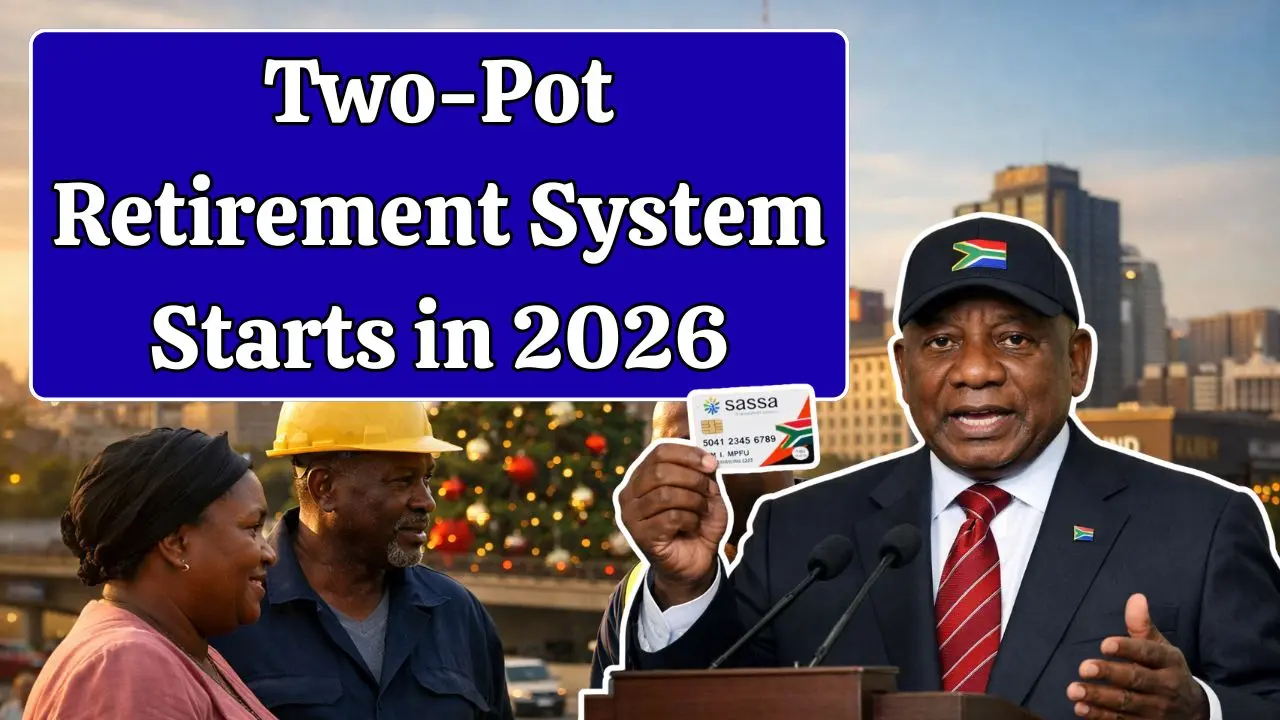
The implementation of the Two-Pot Letfotla System in 2026 in South Africa declares a beginning of a new era for the retirement process. The system is to provide avenues for workers to access part of their retirement savings, when financial support is required, but at the same time, keep the fundamental financial retirement security required for the long term. This is a critical mutation in retirement fund management and access.
Reasons for Introducing the Two-Pot Letfotla System
Given that most South Africans are at the brink of financial ruin owing to high cost of living, job loss, and unseen contingencies, the Two-Pot Retirement System is a welcome change that puts some ‘relief’ explicitly in the hands of workers. It aims to marry short-term fiscal succor and long-term retirement nest-growth.
Working of the Two-Pot System
From 2026, retirement contributions will be bifurcated into two separate components. One part shall proceed into a savings component that allows limited access ahead of retirement; the remaining part shall be preserved strictly for retirement. This system makes it possible for members to have some money available whenever needed without having to drain the entire account.
The savings component allows for withdrawals on specific terms and within set limits, but the contribution aspect is locked until retirement age, sensibly for the long-term financial security.
Who would be affected by the new system?
The Two-Pot system is affecting members from pension fund, provident fund, retirement annuity fund. New contributions and existing fund members could be affected, subject to different transitional rules depending on the type of fund and when contributions were made. Employers and fund administrators must update systems to implement the new structure.
Tax Implications to Consider
Fund withdrawals made from the savings pot are said to be subject to taxation, typically at the member’s marginal tax rate. This would mean extracting your money early is potentially cutting the value of whatever you wanted to save after taxation. Retirement preservation, on the other hand, receives further tax benefits until the point at which the member is ready to retire. This thus affects discipline in long-term savings.
Implications of the Reform on Retirement Planning
The introduction of the Two-Pot Retirement System redefines the approach South Africans need to make when planning for their retirement. Inflexibility notwithstanding, financial planners advise that early withdrawals may only apply in situations where they are absolutely necessary. Preserving the retirement cannot be overemphasized with today’s trend of life expectancy increase, which ultimately implies higher amounts spent on retirement.
Conclusion
The next desynchronization of Two-Pot Retirement in 2026 in South Africa provides an opportunity to build a retirement mask that may not be entirely realistic, but is more affordable and attainable. Their major objective is constraining accessibility to savings while protecting income exposure, thereby establishing a glimmer of hope for workers coming out of financial challenges without touching unshakable certainty. The later one gets familiar with the Two-Pot system, the better for engaging with stories over financial decisions for the coming decade.