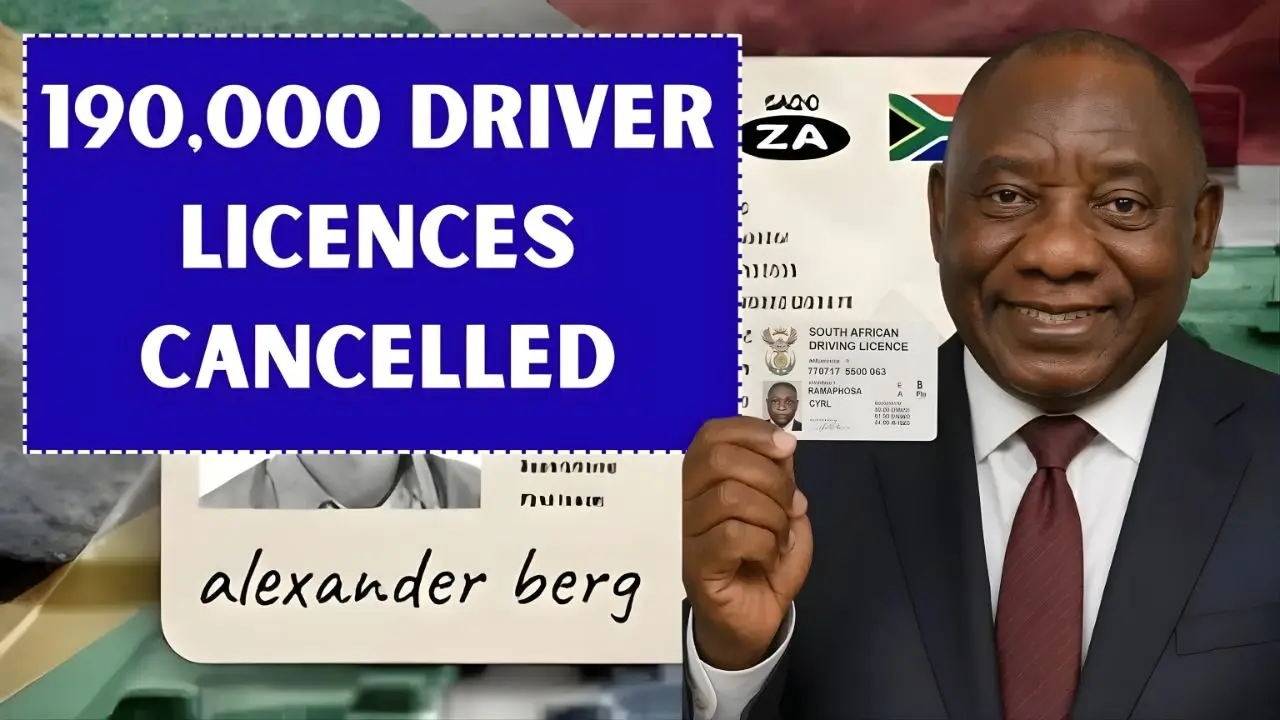
In the 2025-2026 timeframe, the authorities of South Africa did away with roughly 190,000 driver’s licences from the national driver’s licensing system when extensive fraudulence and mismanagement were detected by the government.
Cancelation of Licenses
In an investigation conducted on corruption in the DLTCs and after examining transactions on the various licences, 190,503 licences were at last revoked. Licences were found to be in the name of deceased persons, which pointed to irregularities in the issuance of such licences, or inaccuracies in the records of the licences in the national electronic system.
The revocation is a part of a bigger challenge launched by the Special Investigating Unit (SIU) identifying systemic vulnerabilities in South Africa’s electronic National Traffic Information System (eNaTIS).
Reason Behind Cancellations
Authority figures established that many licenses had been erroneously “granted or manifested” through the weakening of the system, resulting from arbitrary association of license details by officials and intermediaries. Among such agents of violation was the purporting of licenses issued to dead individuals, a case in question to logical and legal standing.
The investigation from the SIU reclaimed approximately R15 million for the several Provincial Transport Departments, profits of prejudice taken from the license frauds.
Impact and Aftermath
The period of canceling is a highly significant occurrence that must be observed: The spectacle presumes a deep graftula within the corruption of the state’s traffic and licensing department, having been heavily dominated by the failures of administration. Many cancelled licenses were rendered in several provinces, hence forming a widespread fraudulent act. The “saboteurs” (vendors of cherished “rural ubantu standards”) do not appear in any way provincial or decentralized, and the numpties don’t at all illustrate allegiance.
Disciplinary action and the possibility of criminal prosecution await those involved in the faulty steps as the Special Investigating Unit (SIU) continues with its vigorous drive.
Today for the public
Drivers whose licenses have been invalidated can expect to soon receive formal notification from the Department of Transport or the local licensing authority. At the least, these affected persons will be requested to verify their identities and license status and, in some cases, have to apply for a license again pending their resolution of any fraudulent acts.
Context of Wider Scope
This operation comes just when the administration of President Cyril Ramaphosa is holistically dealing with corruption in the public service, strengthening state systems such as eNaTIS that render a record of driving and vehicle instances countrywide.
During an enforcement operation aimed at regaining citizens’ trust in order to ensure road safety—too often eschewed into unparalleled conversations—transparency, and, importantly, governmental bearing of public processes becomes paramount.